

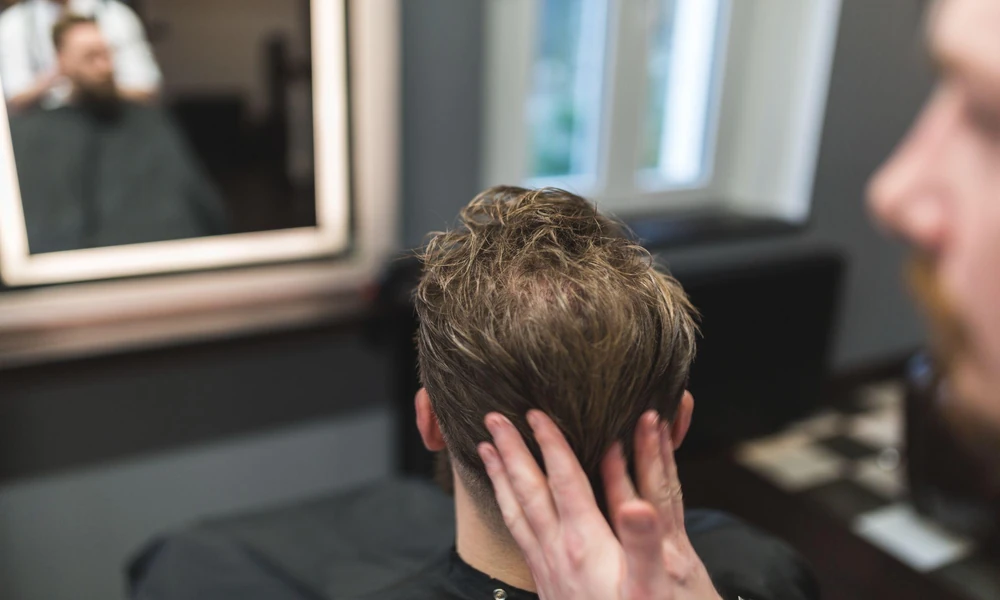
Picture walking out of a haircut happy with what you see in the front mirror, then noticing in a different mirror later that the back doesn’t actually match. It’s a common enough complaint that it says something structural about men’s haircuts specifically: the parts a client can’t easily check themselves are exactly the parts that separate a stylist who actually works with men’s hair regularly from one who doesn’t.
Why a Men’s Cut Isn’t Just a Shorter Women’s Cut
A men’s hair salon in Singapore built around men’s grooming tends to approach a cut differently from a general unisex salon. Fades need gradual, even blending across a curved surface most clients can’t see while it’s happening, and textured or coarse hair behaves differently under clippers than it does under scissors, which is exactly the kind of detail that shows up only once the cut’s already grown out a little.
What a General Salon Sometimes Gets Wrong
- Treating a fade as a single clipper-guard setting instead of a gradual blend across several lengths.
- Cutting the front and sides to look sharp while giving less attention to how the back actually tapers into the neckline.
- Skipping a proper discussion of hair growth pattern, which affects how a style holds up over the following weeks.
Where Men’s Hairdressers in Singapore Earn That Specialisation
A men’s hairdresser in Singapore who handles a high volume of fades, tapers, and textured cuts tends to develop a feel for blending that’s genuinely hard to shortcut. It’s less about one dramatic skill and more about repetition, noticing early when a line is sitting slightly too high, or when a section needs more time before moving the guard down a length.
Chemical Services Add Another Layer Entirely
Once a perm or other chemical treatment enters the picture, the gap between a generalist and a specialist widens further. Men’s hair textures and typical cut shapes respond differently to chemical processing than longer styles do, and a stylist unfamiliar with that specific combination is more likely to misjudge timing or formula strength than one who works with it regularly.
Why Hair Growth Pattern Changes the Plan
A cowlick, a receding hairline, or hair that naturally grows in a particular direction at the crown all affect how a fade or textured cut should actually be shaped, not just where the clipper guard switches length. A stylist who’s seen enough of these patterns up close tends to adjust the plan before cutting a single strand, rather than discovering the issue halfway through and trying to correct for it after the fact.
The Maintenance Conversation Gets Skipped Too Often
A good men’s cut appointment doesn’t end the moment the clippers switch off. How often a fade needs a touch-up to stay sharp, which styling product actually works with that specific hair texture, and how the cut is expected to grow out over the following weeks are all worth a short conversation before leaving the chair, and a stylist used to men’s grooming tends to bring these up without being asked.
A Quick Way to Tell the Two Apart Before Booking
A salon’s portfolio or stylist profiles usually make the distinction obvious fairly quickly. Heavy on long-hair colour transformations with barely a fade in sight suggests a different speciality than a portfolio full of clean tapers and textured crops. Neither type of salon is better in general; they’re just built around different requests, and matching the request to the right one avoids an avoidable disappointment.
Barbershop, Salon, or Somewhere in Between
The line between a barbershop and a full-service salon has blurred quite a bit, and the label on the shopfront matters less than what the team inside actually specialises in day to day. A traditional barbershop might handle clean tapers brilliantly but offer little beyond that, while a salon built around men’s grooming can combine that same precision with services a barbershop typically doesn’t offer, like colour or chemical treatments.
What to Actually Say at the Chair
Being specific helps more than most clients expect. Naming a guard length for the sides, describing how short the back should taper, and mentioning how the hair tends to grow or sit after a few days all give a stylist something concrete to work from, rather than a vague reference photo that leaves too much open to interpretation.
First Visit Nerves Are Worth Mentioning Too
Switching to a new salon or stylist after years with the same barber comes with a bit of its own anxiety, and that’s worth saying out loud rather than keeping to yourself. Mentioning past disappointments, specific features a previous cut got wrong, or even just which photos online influenced the booking gives a new stylist useful context that a silent first visit never provides.
Tired of a cut that looks right in one mirror and wrong in another? That’s usually a specialisation gap, not bad luck. Contact Picasso Hair Studio to book with a stylist who actually works with men’s hair day to day.
