

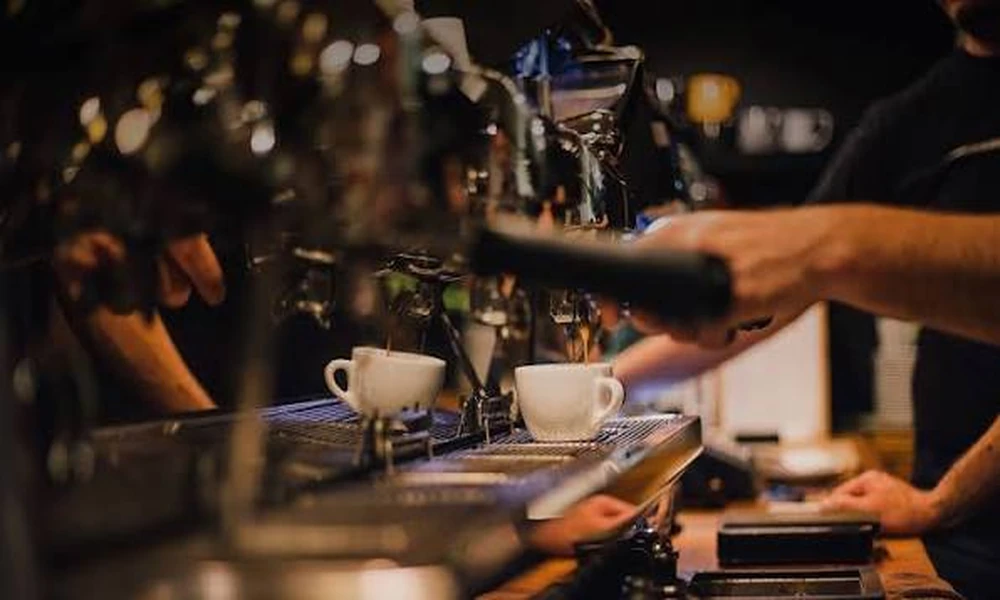
Specification sheets for coffee equipment are written to impress rather than to inform, and most of the numbers on them have little bearing on what ends up in the cup. Pressure is quoted at fifteen bar when nine is what matters. Capacity is quoted per hour when the question is how fast it recovers between two drinks. Evaluating a coffee maker machine singapore businesses will rely on daily means knowing which specifications actually predict performance.
Boiler Type Predicts Consistency
The heating system determines whether the machine holds temperature under load. A single boiler alternates between brewing and steaming, which is fine at low volume and produces waiting at higher volume. A heat exchanger draws brew water through a steam boiler, allowing both simultaneously. Dual boilers heat separately and hold each at its own temperature, which is the most stable arrangement. For anywhere producing milk drinks in sequence, this is the single most consequential specification.
Recovery Time Beats Headline Capacity
A machine advertised at a hundred and twenty cups an hour is describing a theoretical maximum nobody experiences. What matters is how quickly it is ready for the next drink, because office demand arrives as a queue of six people at nine in the morning rather than as an even flow. Ask for the cycle time for a milk-based drink and the number of consecutive drinks it can produce before it needs to recover. Those two figures describe the machine you will actually use.
The Grinder Is Half the Machine
On any bean-to-cup machine, grind quality sets the ceiling on what the brew unit can achieve. Burr grinders, whether conical or flat, produce a consistent particle size; blade grinders do not and have no place here. Look for stepped or stepless adjustment so grind can be dialled in for different beans, and ask about burr material and expected life, since burrs are a wear item and a dull set produces flat, under-extracted coffee that people blame on the beans.
Brew Temperature and Pressure
Espresso extraction happens in a narrow band, broadly around ninety to ninety-six degrees at roughly nine bar of pressure at the puck. Machines advertising fifteen or nineteen bar are quoting pump capability rather than brewing pressure, and higher is not better. What matters is temperature stability under repeated use and whether the brew temperature is adjustable, since different roasts perform best at slightly different points. Consistency between the first cup and the tenth is the thing to test.
Milk System Design and Daily Cleaning
Fresh milk systems produce noticeably better drinks and demand daily attention, lines flushed, components cleaned, the fridge managed. Look for an automatic rinse cycle after each use and a proper cleaning programme, and check how many parts must be removed and washed manually, since a system requiring ten minutes of disassembly will not be cleaned reliably in a busy office. Powdered systems are simpler to maintain and produce a different drink; decide which trade you are making before buying.
Plumbed or Tank Fed
A plumbed machine draws water continuously and needs a supply and a drain within reach, which suits a pantry designed for it and removes the possibility of running dry mid-morning. A tank-fed machine goes anywhere and depends on somebody refilling it, which in practice means it will be empty at the least convenient moment. Where volume is meaningful, plumbing is worth the installation cost. Suppliers of commercial coffee equipment will advise what the pantry can support.
Water Filtration Is Not Optional
Filtration protects the machine’s internals and stabilises taste, and it is the cheapest insurance available on an expensive appliance. Ask what filtration is included, what the cartridge replacement interval is, what it costs, and whether neglecting it voids any warranty, since scale damage caused by an unmaintained filter is a common exclusion. Diarise replacement rather than waiting for a symptom, because by the time taste changes the internals have been working in poor water for months.
Footprint, Height and Servicing Access
Measure three dimensions, not two. Width and depth on the counter, and height including clearance to lift the hopper lid and the bean container, which is frequently overlooked and results in a machine that cannot be refilled where it stands. Check the clearance required behind for ventilation and at the sides for servicing. Also consider noise, since a grinder running beside an open-plan desk area is more intrusive than anyone expects.
Controls, Counters and Who Uses It
Two features matter in shared environments and appear on no marketing material. A cup counter records how many drinks have actually been made, which tells you whether the machine is sized correctly, when servicing is genuinely due, and whether consumable consumption makes sense. Access controls, whether a simple lock on settings or user codes, prevent a well-dialled machine being adjusted by whoever decided the coffee was too weak. Also look at the interface itself, an unlabelled row of icons produces a queue of people pressing the wrong thing, while a clear display with named drinks does not.
Service, Parts and Support
Over a machine’s life, support matters more than any specification. Ask what preventive servicing is included and how often, what response time applies to a breakdown and whether it covers your operating hours, whether a loan machine is provided, and whether parts are held locally. Evaluated on boiler configuration, recovery, grinder quality, cleaning practicality and support, a coffee maker machine singapore workplaces choose performs consistently rather than impressively on paper.
