

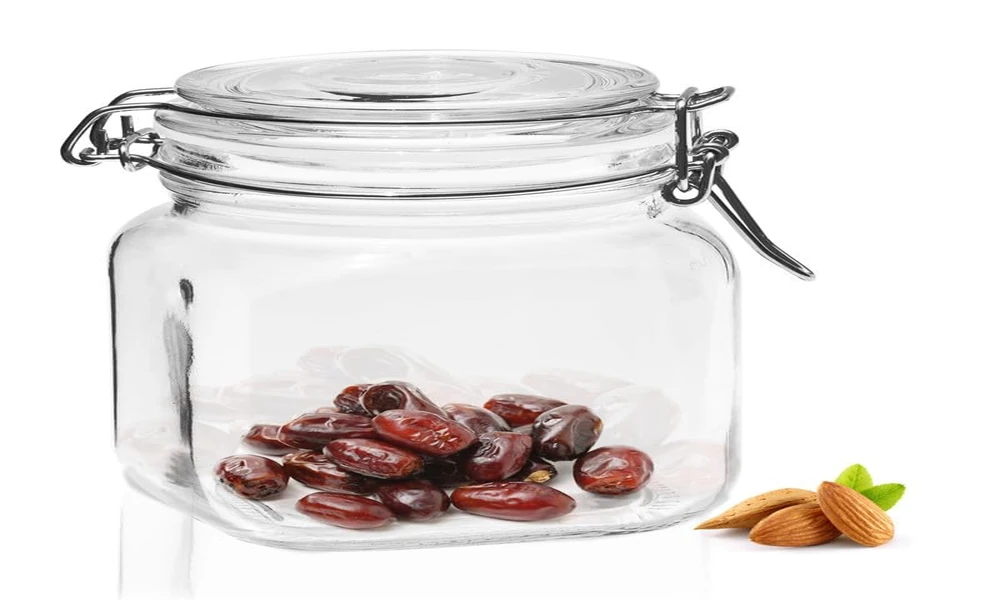
The difference between a container that keeps things fresh and one that merely covers them is a few millimetres of silicone and a pair of clips. A lid that rests on a rim relies on friction. A jar with lock lid compresses a gasket against the rim and holds that compression mechanically, which is what turns a container into a seal and makes the contents behave quite differently over weeks.
How the Mechanism Works
The design pairs a gasket seated in the underside of the lid with clips or a metal lock that draws the lid down onto the jar rim. Closing the clips applies and maintains pressure, so the seal does not depend on how firmly someone pressed the lid or on how tightly they screwed it. The result is consistent from one closure to the next, which matters because most seal failures in ordinary containers come from inconsistent closing rather than from any defect in the container.
What a Real Seal Actually Prevents
Three things move across a poor seal. Moisture, which is the reason biscuits soften and powders clump in this climate. Odours, in both directions, so dried shrimp does not scent an entire cupboard and coffee does not acquire the smell of whatever sits beside it. And insects, which find their way into anything not genuinely closed. A compressed gasket addresses all three at once, and the difference shows within days on anything hygroscopic.
Where It Earns Its Place
Dry goods that must stay crisp or free-flowing: biscuits, crackers, cereal, flour, sugar, rice, coffee beans, nuts, dried mushrooms and ikan bilis. Strong-smelling ingredients that need containing. Anything transported, since a locked lid does not lift in a bag. And anything stored somewhere humid, which in most Singapore kitchens means everywhere. For items used daily and consumed quickly, a simpler closure is perfectly adequate and faster to open.
Metal Locks and Plastic Clips
Metal lock hardware generally applies more consistent pressure and lasts longer than moulded plastic clips, which can fatigue and eventually snap after repeated flexing. Plastic clips are lighter and cheaper and perfectly serviceable for occasional use. Where a container will be opened daily for years, the metal version is the better purchase. Check that the clips engage firmly and release without a struggle, since a lock that requires two hands and a grimace will end up being left unclipped.
The Gasket Is the Consumable
Everything depends on the seal, and seals age. Look for a gasket that can be removed for washing, because the groove it sits in collects crumbs, oil and moisture, and a contaminated seal stops sealing. Silicone tolerates heat and washing better than rubber and does not perish as quickly. Inspect periodically for flattening, cracking or a permanent set, and replace where the supplier offers spares. A jar with a tired gasket is just a jar with clips on it.
Material and Food Safety
For food, confirm the body is food grade and check the resin. PP tolerates heat and washing well and resists oils, making it the sensible default for anything reused frequently. Clear bodies let you see contents and levels without opening, which reduces how often the seal is disturbed. Where a container will be washed in a dishwasher, confirm both the body and the lock hardware tolerate it, since some metal components should be washed by hand.
Practical Habits That Preserve the Seal
Fill and close only when contents are fully cool, because warmth trapped inside condenses and the moisture goes straight into whatever you were trying to keep dry. Do not overfill to the rim, which prevents the lid seating and compresses the gasket unevenly. Wipe the rim before closing, since a single crumb under the seal creates a channel. And dry the gasket groove thoroughly after washing before reassembling, or the seal itself becomes the damp spot.
Airtight Is Not the Same as Waterproof
Two properties get conflated and they are not identical. A gasket and clip arrangement reliably keeps air and moisture vapour out, which is what preserves dry contents. Whether the same container will hold liquid upside down in a bag depends on how the gasket seats and how much pressure the clips maintain, and manufacturers rarely rate containers for that. If a jar will travel with liquid inside, test it before trusting it: fill with water, close it, invert it over a sink and leave it for a minute. That thirty-second check has saved a great many bags.
Beyond the Kitchen
The same mechanism suits workshops, laboratories and storerooms: fasteners and small components that must stay dry, powders, adhesives, laboratory samples, and anything decanted from a bulk supply into working quantities. Sealed containers with locking lids are also the right answer for anything transported in a vehicle, where an ordinary lid will part company with its base over the first speed hump. Suppliers offering containers with metal locks usually carry a range of capacities for exactly these uses.
Choosing Sizes That Work Together
Buy square or rectangular bodies where shelf space is tight, since round jars waste the corners, and prefer flat lids that allow stacking. Standardise on one or two sizes rather than accumulating an assortment, so lids are interchangeable and the shelf stays orderly. Chosen for the contents and maintained with a clean gasket, a jar with lock lid is one of the few storage purchases that keeps performing exactly as it did on the first day.
